The Process Chain at a Glance
A custom challenge coin is not made in one operation but through a linked chain: material selection, digital modeling, mold cutting, blank forming, surface preparation, electroplating, enamel work, edge finishing and inspection. The key point is that every stage both creates and prevents a specific class of defect, and quality is decided at the handoffs. A flaw left by one stage is locked in by the next; a flaw caught early is cheap to correct. Sharp lettering, even plating and clean enamel are cumulative results of keeping each upstream stage inside its control limits.

The table below compresses the chain into what goes in, what goes wrong and how it is detected at each handoff. Size, thickness, weight, plating thickness, color count and tolerance belong in the written specification and quotation you confirm with your manufacturer.
| Process step | Input to the step | Typical defect introduced here | How it is checked |
|---|---|---|---|
| Material prep | Alloy stock (brass, zinc alloy or iron) | Uneven hardness, impurities | Incoming alloy check, trial blank |
| 3D modeling | Artwork, relief depth | Flat relief, undercuts, shallow lettering | Height-map check before toolpath |
| Mold cutting | Toolpath, die steel | Overcut, soft corners, chatter | Cavity check, first-article strike |
| Blank forming | Cut die, blank | Incomplete fill, flash, porosity | First-off gauge vs model |
| Deburring / polishing | Struck or cast blank | Burrs, swirls, rounded high points | Raking-light check, finish sample |
| Plating | Polished, cleaned blank | Color drift, thin recess, peeling | Bath monitoring, color matching |
| Enamel / inspection | Plated, filled coin | Bleed, underfill, bubbles, cure haze | Controlled-light, manual and automated pass |
Notice the checking column is populated at every stage, not just the end. A chain that inspects only the finished piece can tell you that a coin is bad, but not which stage made it bad.
Material Selection and What It Changes Downstream
Material choice is usually framed as cost or appearance, but on the process chain it decides how every later stage behaves. Brass, zinc alloy and iron are common available options, each with a different balance of hardness, ductility and castability. A harder, less ductile stock holds a crisp struck impression but resists deep relief and thin lettering; a free-flowing casting alloy fills intricate cavities and 3D relief well but is prone to porosity and surface sinks. Match the alloy to the forming method, since a mismatch reappears downstream as incomplete fill or plating that lifts. Confirm composition and temper in the written quotation.
From 3D Model to Mold: Where Detail Is Won or Lost
This is the stage that decides, more than any other, how sharp small lettering will look. Work begins with 3D modeling to refine designs: flat artwork becomes a height map where relief levels and lettering depth are assigned deliberately. Assign too little height to fine detail and raised letters fade after polishing and plating; build undercuts or near-vertical walls a tool cannot reach cleanly, and hand finishing rounds those edges. The mold is cut and checked under magnification against the height map. Chatter marks, overcut cavities and soft corners become permanent. A first-article strike against the approved 3D model catches a mold error before a batch reproduces it.
Blank Formation: Die Striking vs Die Casting
Blank formation is where the model becomes metal, and the choice between die striking and die casting, as available forming options, determines which defects are even possible. Die striking presses a blank into a hardened die, so the metal is displaced rather than melted and takes a crisp, dense impression suited to fine lettering and flat relief. Its limitation is depth: deep 3D relief is hard to fill by displacement, and an under-ductile alloy can crack at high points. Die casting injects molten alloy into the cavity, suiting sculptural 3D relief and irregular outlines, but trades those gains for porosity, flash and sinks. Striking risks incomplete fill and cracking; casting risks porosity and flash. Neither is universally better, so confirm the method in the written quotation.
Deburring, Polishing and Surface Preparation
Surface preparation is the least glamorous stage and the one most often blamed, wrongly, for plating failures. Its job is to remove flash, burrs, seams and oxide without removing the detail the mold created. Over-polishing is a real defect: aggressive wheels round off crisp high points and leave scratch swirls that glare under a bright plated finish. Under-polishing leaves burrs that read as bumps in the plating and seams that trap enamel color. Cleaning is a process control, not a rinse; residue prevents bonding, so adhesion failure is frequently a preparation problem. Confirm the finish level in the written quotation.
Electroplating: Color, Coverage and Consistency
Electroplating applies color and corrosion protection, and small variations in a well-run line produce visible inconsistency. Parts are racked, cleaned and immersed in a controlled bath; the defects depend on a small set of linked variables:
- Current density, burning high points when too high and starving recesses when too low.
- Bath chemistry and temperature, whose drift over a long run shifts the deposited tone.
- Racking and cleaning, where poor contact or residue causes peeling and patchy deposit.
Consistency is engineered rather than hoped for, through bath monitoring, thickness sampling, controlled racking and side-by-side color matching under a standard light source. Antique finishes, bright finishes and other plating options magnify different surface flaws, so the finish should be chosen alongside the polish level. Confirm plating thickness and exact tone in the written specification and quotation with your manufacturer.
Enamel Filling, Edge Work and Final QC Gates
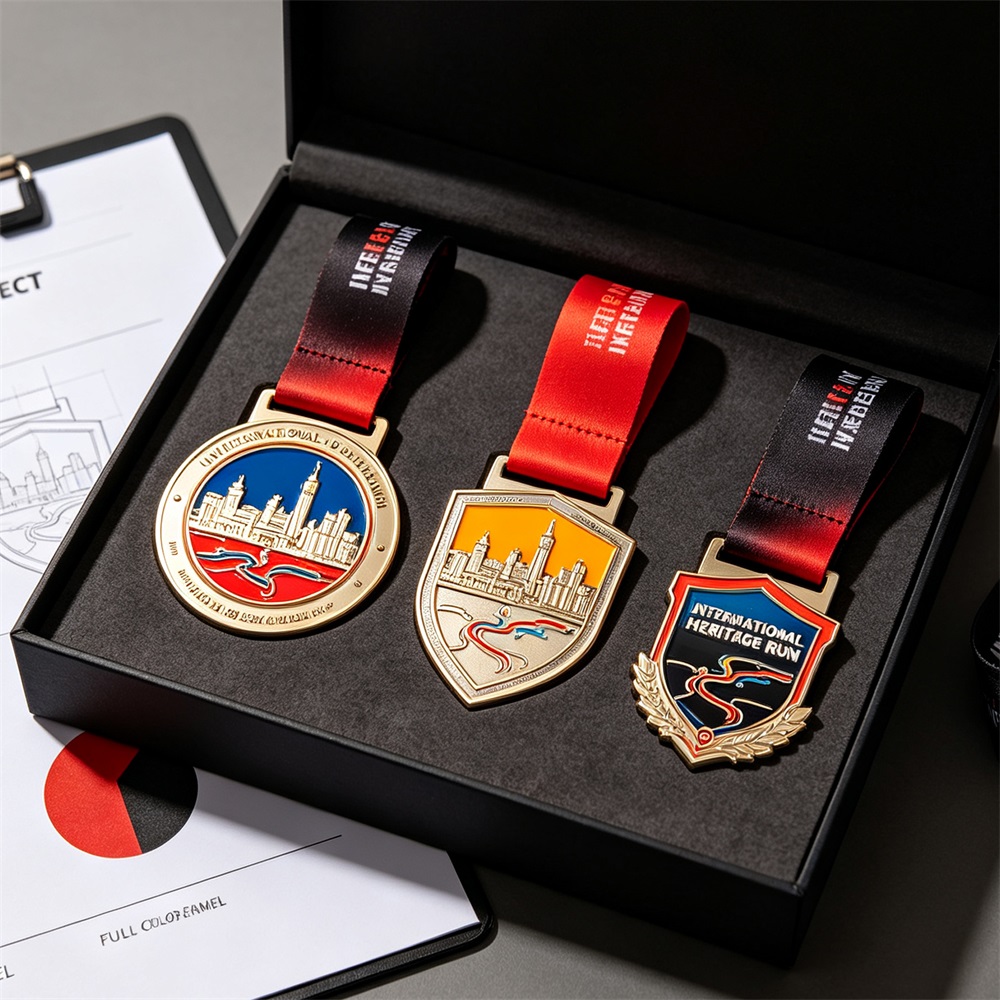
Enamel work adds color to the recessed fields, where mistakes are most visible. Soft enamel and hard enamel are both available options, differing mainly in how the filled recess relates to raised metal lines and whether the surface is polished flat after curing. The defects here are specific: color bleeding into an adjacent cell, underfill, overfill, bubbles, dust inclusions and cure haze. Under-cure leaves a film that scratches and yellows; over-cure can discolor or lift the fill. A clear epoxy or protective coat is worth specifying when a broad soft-enamel field will be handled often, but it adds risks of bubbles and a cloudy cast. Confirm the coat in the written specification and quotation with your manufacturer.
Edge work, whether a reeded, rope or plain edge as available options, is where handling damage and plating wear concentrate, so edge nicks and thin edge coverage belong on the inspection list. Individual numbering or engraving, when specified, introduces sequencing errors and depth variation that appear only under raking light. Final QC is a gate, not a formality: a full-process QC system combines manual and automated inspections to ensure precise product specifications, catching dimensional drift at volume while manual inspection under controlled light catches cosmetic judgment calls machines miss. SG-CRAFT pairs direct manufacturing capability with dedicated, 1-on-1 service and after-sales support with quality tracking, reorder assistance, and responsive communication.
Frequently Asked Questions
Why does the mold determine how sharp small lettering looks?
The mold is the physical limit on lettering sharpness, because every blank is a copy of the cavity and cannot be sharper than the tooling that formed it. Soft corners, shallow depth or chatter are reproduced on every piece, and polishing can only remove metal, not add definition. That is why SG-CRAFT treats 3D modeling to refine designs as the start of quality control, resolving depth and draft in the model and verifying it with a first-article strike.
What causes plating color to vary between pieces in one run?
Plating color varies within a run mainly because bath conditions drift while parts are processed, not because the coins differ. As ion concentration, temperature and current density move over a long bath, the deposited tone shifts, so pieces racked early and late no longer match. Uneven racking gives some parts a thinner deposit that reads lighter in recesses. The fix is bath monitoring, consistent racking and color matching under standard light.
Is die striking or die casting better for a 3D relief coin?
Die casting is generally better for a pronounced 3D relief coin, because molten alloy flows into sculpted cavities that a struck blank cannot fill by displacement. Striking gives crisper shallow relief and avoids the porosity and flash casting introduces, so relief depth in the artwork should decide the method. Both routes carry defects downstream. SG-CRAFT, an integrated factory supporting end-to-end manufacturing, from mold development to mass production, can advise on that choice.
When is an epoxy or protective coat worth specifying?
An epoxy or protective coat is worth specifying when a coin is handled often, when a broad soft-enamel field needs a flush surface, or when raised detail needs a physical barrier, not as a default. It levels recessed color and shields soft fills from scratches, but creates its own defects: trapped bubbles, edge pooling, dust and a cloudy cast over the plating. Weigh that trade-off against how the coin will be used.
What should a final inspection actually check?
A final inspection should verify conformance to the written specification across dimensions, finish, color and marking, not just sort broken pieces. That means checking dimensions against the approved model, plating tone under standard light, enamel fill and bleed, edge condition and a cosmetic pass for scratches. SG-CRAFT applies a full-process QC system that combines manual and automated inspections to ensure precise product specifications, catching drift during the run. Its team includes 45 Sales Executive, 20 Senior Designer and 300 Production Team roles.
Ready to move from process to a physical coin? Send your artwork or a reference image, together with quantity, size, material, plating and finish, and SG-CRAFT will return a personalized, no-obligation quote. Global Shipping - Free Artwork applies, and direct manufacturing capability paired with dedicated, 1-on-1 service means factory-direct pricing. A self-managed supply chain allows for efficient scheduling and reliable delivery. Based in Guilin City, China, the team provides after-sales support with quality tracking and responsive communication. Get Your Free Custom Quote today, or write to info@custombadgepin.com.